
Description
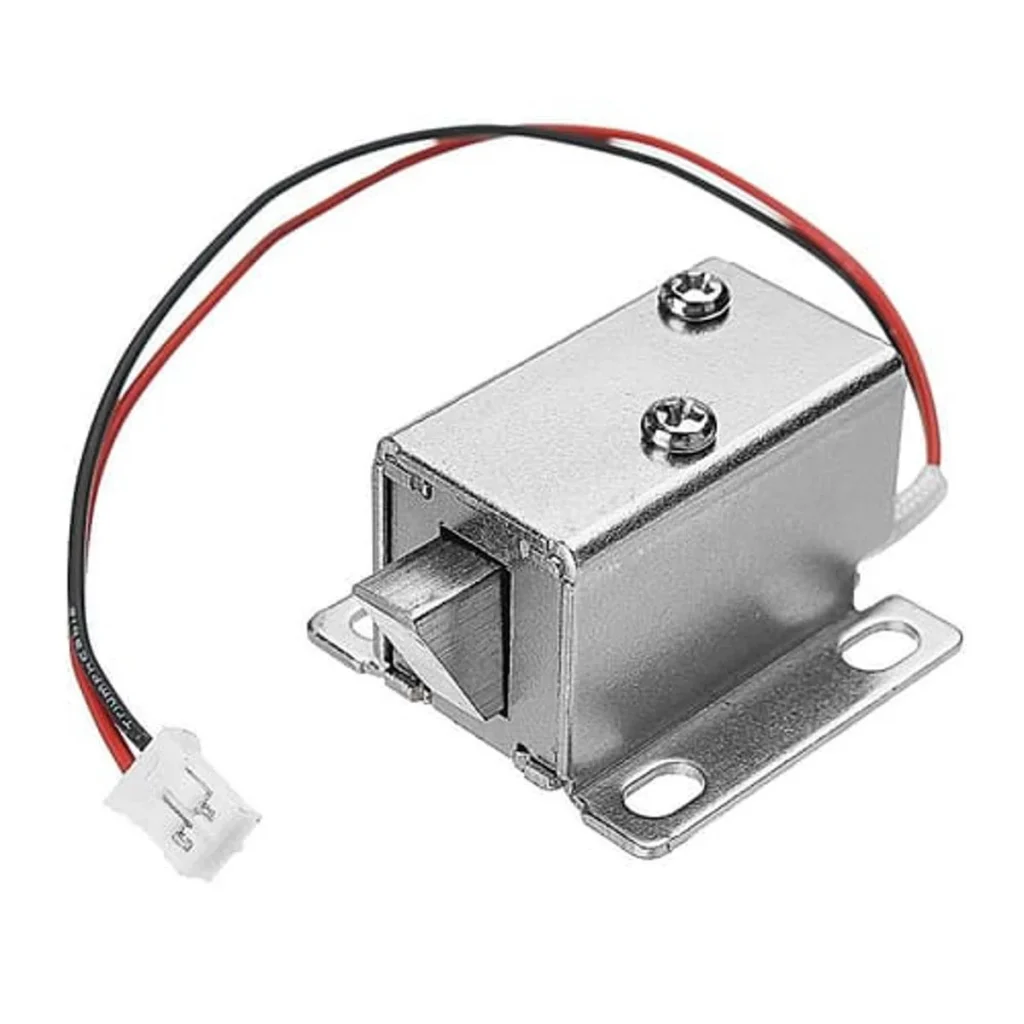
5V Electric Door Lock Solenoid
The 5V Electric Door Lock Solenoid is a compact electromechanical locking device that uses electromagnetic force to operate a movable locking pin or bolt. When the rated DC voltage is applied, the solenoid activates and moves its internal mechanism to change the lock position.
This type of electric lock is useful for small-scale access-control projects where electronic signals are used to control physical locking mechanisms. It can be integrated with Arduino, ESP32 and other microcontroller boards through a suitable relay or MOSFET driver circuit.
The lock is suitable for DIY electronic lockers, cabinets, model doors and automated security prototypes. Its actual locking action, bolt movement and default position depend on the specific solenoid-lock design.
Technical Specifications
| Specification | Details |
|---|---|
| Product Type | Electric Solenoid Door Lock |
| Rated Voltage | 5V DC |
| Operating Mechanism | Electromagnetic Solenoid |
| Locking Method | Electrically operated bolt |
| Control Type | Electronic switching |
| Compatible Controllers | Arduino, ESP32 and other microcontrollers with a driver |
| Power Source | Regulated 5V DC supply |
| Mounting | Mechanical installation |
| Applications | Cabinets, lockers and access-control projects |
Note: Operating current, power consumption, bolt dimensions, holding force and lock/unlock behaviour depend on the exact model. Check the product label or supplier datasheet before selecting the power supply.
Key Features
-
5V DC operating design.
-
Electromagnetic locking mechanism.
-
Compact solution for small electronic locking projects.
-
Suitable for microcontroller-based automation.
-
Can be controlled through a relay or MOSFET driver.
-
Useful for smart cabinet and locker prototypes.
-
Supports integration with electronic access-control systems.
Applications
-
Arduino electronic door lock projects.
-
Smart cabinet and drawer locking systems.
-
DIY electronic lockers.
-
RFID-based access-control projects.
-
Keypad-controlled security systems.
-
Password-based door lock prototypes.
-
Automated storage compartments.
-
Small robotics and mechanical automation projects.
How to Use / Setup
-
Mount the solenoid lock securely according to its mechanical design.
-
Connect the lock to a suitable 5V DC power supply.
-
Use a properly rated relay module or logic-level MOSFET driver to control its power.
-
Connect the driver control input to an Arduino or compatible controller.
-
Program the controller to activate the lock when the required access condition is met.
-
Test the locking and unlocking mechanism before installing it permanently.
Arduino connection note: Do not power the solenoid directly from an Arduino 5V pin or GPIO pin. Solenoids can draw considerably more current than a microcontroller output can supply. Use a separate regulated supply with a common ground where required. For a MOSFET-driven DC solenoid, install a suitable flyback diode across the coil unless the module already includes protection.
Precautions
-
Confirm the rated voltage and operating current before connecting power.
-
Use a power supply capable of delivering the required solenoid current.
-
Avoid continuous energising unless the lock is specifically rated for continuous duty.
-
Keep wiring insulated and connections secure.
-
Prevent mechanical obstruction of the locking bolt.
-
Allow sufficient space for the bolt’s movement.
-
Use suitable driver and flyback protection circuitry.
-
Do not treat a small DIY solenoid lock as a certified security or emergency-exit locking device.
YouTube Tutorial
Watch 5V Solenoid Door Lock Arduino Connection and Access Control Tutorials
Buy in Pakistan
Looking for a 5V Electric Door Lock Solenoid in Pakistan? Explore electronic components, automation accessories and Arduino project supplies at Electroway.org or through the Electroway App.
4. Product Summary
The 5V Electric Door Lock Solenoid is a compact electromagnetic locking component for electronic access-control and automation projects. It can be integrated with Arduino, ESP32, RFID readers and keypad systems using a suitable driver circuit and regulated power supply.


Reviews
There are no reviews yet.